Nothing has accelerated digital payments technology as much as the response to COVID, which has increased the urgency for businesses to think faster and adapt to a cashless society.
For those working in technology in any industry, there has been a huge amount of pressure on their time and resources. Rapid upgrades, digitalization, and the need to plug skills gaps have become business necessities.
For Chief Information Officers (CIOs) and Chief Technology Officers (CTOs) in banking and finance, the pressure increased even more, with in-person banking not possible, and organizations going online-only or cashless in-store.
The transformation of the payments landscape
Transforming critical payments infrastructures from fragmented, patched-over legacy technologies to cloud-native, modular component-based models is becoming the payments industry’s key future-proofing plan. It’s the only way they can meet the digital demands and growing payment volumes in a new world where customer experience is paramount.
The ever-changing landscape of technology, payments, open banking, and new value-added services that are being connected at an incredible pace is rendering the payment process almost invisible. Instead, it’s all about a demand for a seamless, clean experience, and an intolerance for anything less.
Collaboration is helping deliver payments technology
The significant changes in financial institutions’ operating models have led to a proliferation of technologies including, artificial intelligence (AI), machine learning, and cloud services.
But payment technology is not one-size-fits-all. To maximize benefits, businesses are quickly realizing that they need flexible, future-proof payment solutions.
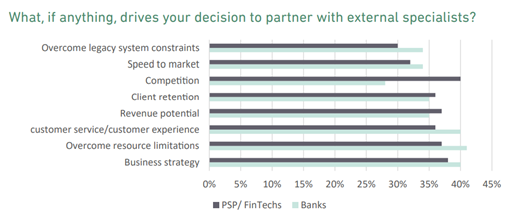
This is challenging when every business is different, and technology needs vary. According to a study by Banking Circle, the three key priorities for CTOs and CIOs that are pushing the decision to collaborate are:
- Improving the quality of data
- Improving customer experience
- Digital migration for delivery of services
For businesses that lack sufficient in-house support, external IT experts can help organizations make sensible long-term infrastructure provisions, with enough capacity to adapt to new and evolving technologies.
Driven by a range of factors, the last few years have seen a gradual increase in collaboration between financial institutions and third-party providers, with banks, PSPs, and FinTechs working with partners to deliver payment technology.
Future-proofing is only possible with data insights
Among the major issues causing worry for CIOs and CTOs in the payments, the industry is tech outages and a lack of data consistency between internal systems.
Data and analytics are the only currency that buys insights into an organization’s payments ecosystem. Analytics provides access to a mix of traditional data, as well as a real-time view of what’s happening in a payments system.
To turn payment metrics and data into valuable information and provide value-added services, as well as stand out in the marketplace, card issuers, acquirers, and retailers must have advanced reporting software and tools to highlight the KPIs.
With payment analytics and insights in real-time, IT organizations can better understand how the information system may impact the payment process. Payments analytics, for example, can provide insight into the use of different payment types and acceptance channels, how popular they are, and how they have performed over time – valuable insight which can help inform business decisions around the preferences of your customers and where future investments should be made.
How IR Transact can optimize payments systems
- Insights. Complete visibility and detailed analytics enable control over your payments environment. This allows quick identification of patterns and the capacity to solve problems to ensure successful deployments and optimal performance across all payment types.
- Business performance. Gaining insight into your payment data helps make intelligent business decisions to ensure a better customer experience, minimize risk and grow revenue while saving on operational costs.
- Managing multiple technologies. Deep visibility into inter-connected technologies and channels from one single window allows peace of mind that systems are optimized, and networks are functioning at their best.
