Mention automation and someone will invariably (and understandably) mention its impact on jobs. There are a lot of opposing views on the subject, of course, but the one thing everyone seems to agree on is that robotics and AI will have a profound impact on human jobs, going forward.
At today’s Delivering the Future event at a fulfillment center south of Seattle, the company announced that it will be teaming with MIT and the Ipos research firm to determine how these systems will impact work.
The subject is obviously an important one for Amazon. Not only is the retail giant a massive employer, it’s been deploying robotics in its fulfillment centers for over a decade. The direct impact they’ve had on human workers has been the subject of debate ever since. Amazon, naturally, argues that the machines have the effect of removing physical labor burden from human employees.
Critics, on the other hand, have suggested that robots make human jobs more robotic — a potential issue for work that is highly repetitive. There’s also the big question of job numbers. Proponents of automation suggest the technology will create more and better jobs. The opposing view holds that many existing blue collar-jobs will be displaced, and upskilling humans to work with robots is easier said than done.
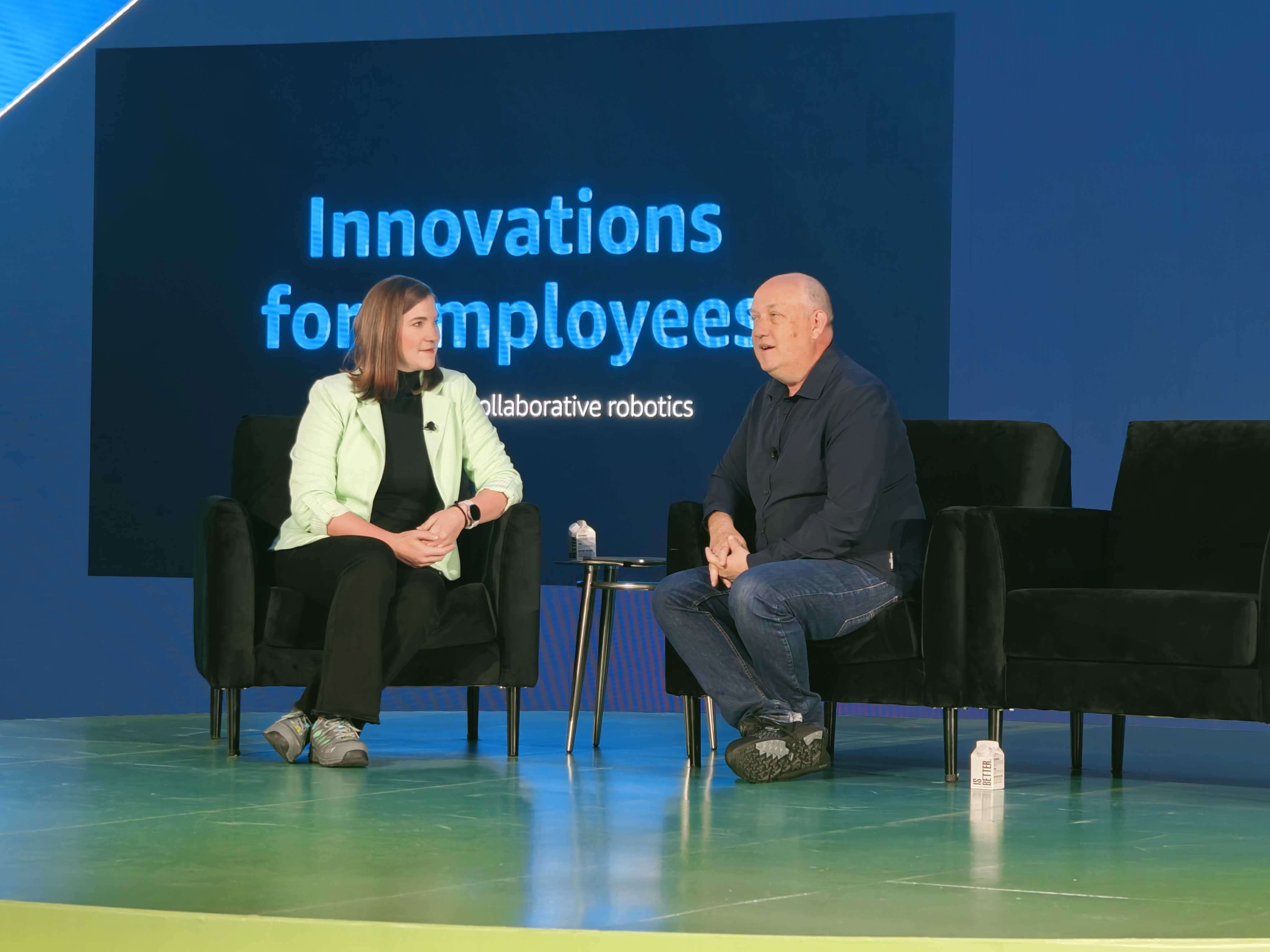
Image Credits: Brian Heater
The study seems less concerned with actual job numbers, and more with how human employees and the public feel about the inevitable increase of robotics and AI in warehouses, manufacturing facilities and other industrial settings.
Amazon Robotics’ Chief Technologist Tye Brady did, however, address the question of job numbers ahead of today’s event, noting:
We have more than 750,000 mobile robots in our operations and thousands of other robotic systems that help move, sort, identify and package customer orders. It’s taken us more than 10 years to reach this scale. During that time, Amazon has hired hundreds of thousands of employees to work in our operations. We take a purpose-driven approach to how we design and deploy technology at our facilities and we consistently prioritize using robots to support safety and ease everyday tasks for our employees.
The study will applied to key facets of robotic developments, including the discipline of human-robot interaction (HRI), a field that pretty much does what it says on the tin.
“The key to effective teamwork is building a shared understanding of what our partners will do and what they will need to be successful,” says MIT’s Julie Shah “Our research shows that the best way to optimize human-robot team performance is to develop robots that are active collaborators in helping a human to learn about their capabilities, limitations and behaviors.”
