
As the retail sector grows increasingly reliant and focused on data and artificial intelligence (AI), it’s essential that retailers understand exactly how first-party data analysis can be crystalized into insights on customer behavior – and, in turn, a tangible competitive advantage.
To that end, consider the chart below, dubbed the “Data & AI Maturity Curve.”
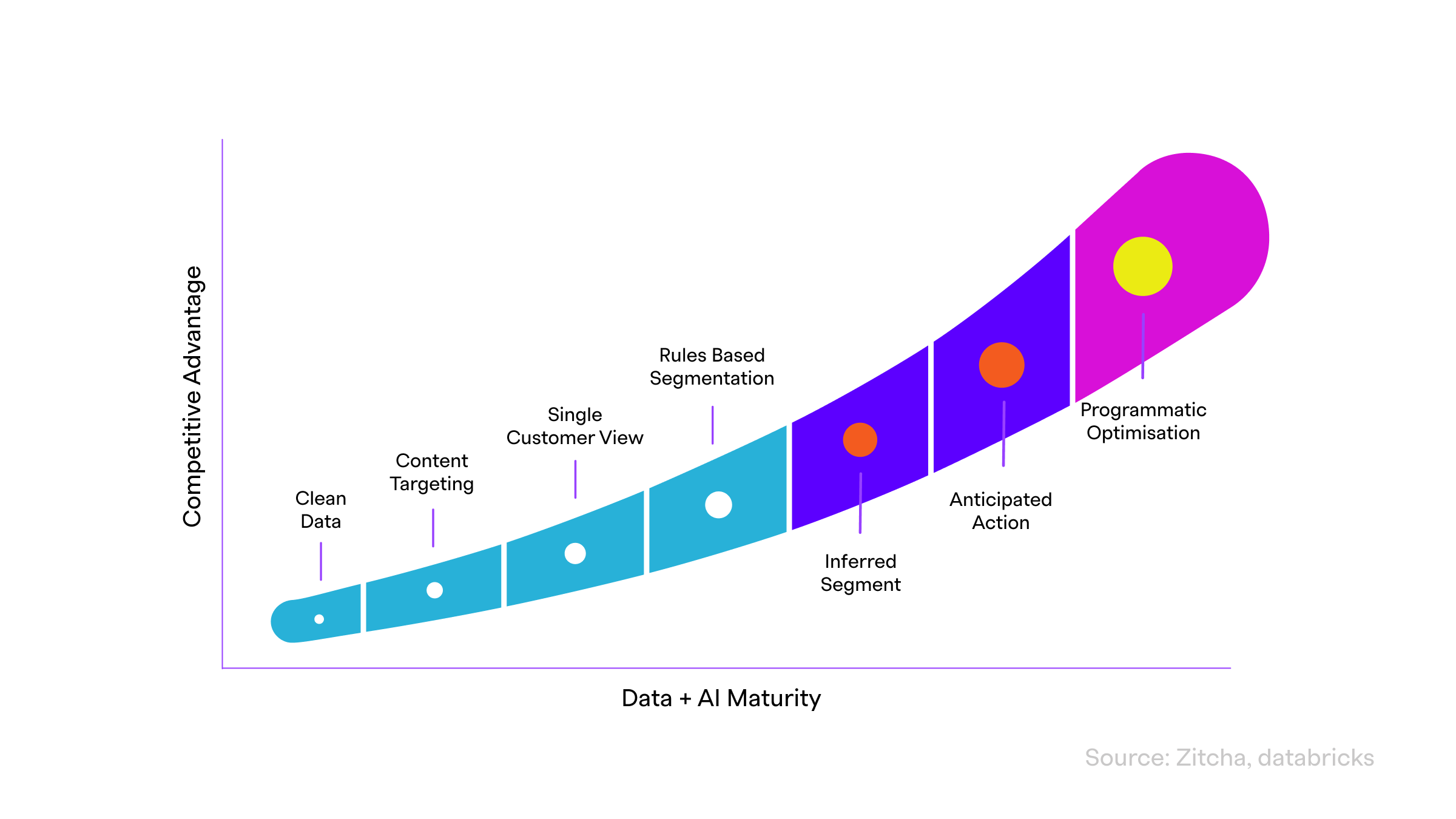
The data + AI maturity curve. Image Credits: Zitcha/Databricks
This is a simplified view of how a retailer’s data and AI capabilities (charted on the x-axis) directly correlate with the competitive advantage of its retail media network (charted on the y-axis). A general strategic approach following this curve will see retailers making incremental steps towards sophistication, inching ever closer to the vaunted “predictive analysis” that will allow them to anticipate customer needs and deliver finely tuned, personalized experiences.
This is all far easier said than done, however, and some steps are more important than others when it comes to intelligent targeting. Let’s look at the three most important milestones along the road to predictive analysis in the retail media context.
Clean, accepted data
The “on-ramp” to this curve for any retailer looking to harness the power of data and AI begins with a full view of clean and accepted data across all customer interactions and media placements, whether physical or digital, owned or rented. This data is crucial for understanding the opportunity, managing yield, and accurately measuring campaign performance.
As technology formalizes retail media as a category, the chance to lead on metric integrity and data quality is significant. Understanding the unique count of customers along the journey through physical and digital touch points is also crucial, as duplicating customer counts to inflate the value of the media network is a risk to both trust and budget growth in the long term.
Let’s look at the three most important milestones along the road to predictive analysis in the retail media context.
Data is, ideally, streamed to a behavioral data platform (BDP) and stored in a secure, cloud-hosted data lake. Data from SaaS systems updates the BDP via a server-to-server connector. Data is then modeled and enriched by the BDP, where every customer interaction is unified to a single, holistic view of the customer.
This provides a single profile with an event history with thousands of records for each customer. While certainly a critical step, this really is the ground floor when it comes to media targeting – once this foundation is established, maturity can begin to build up.
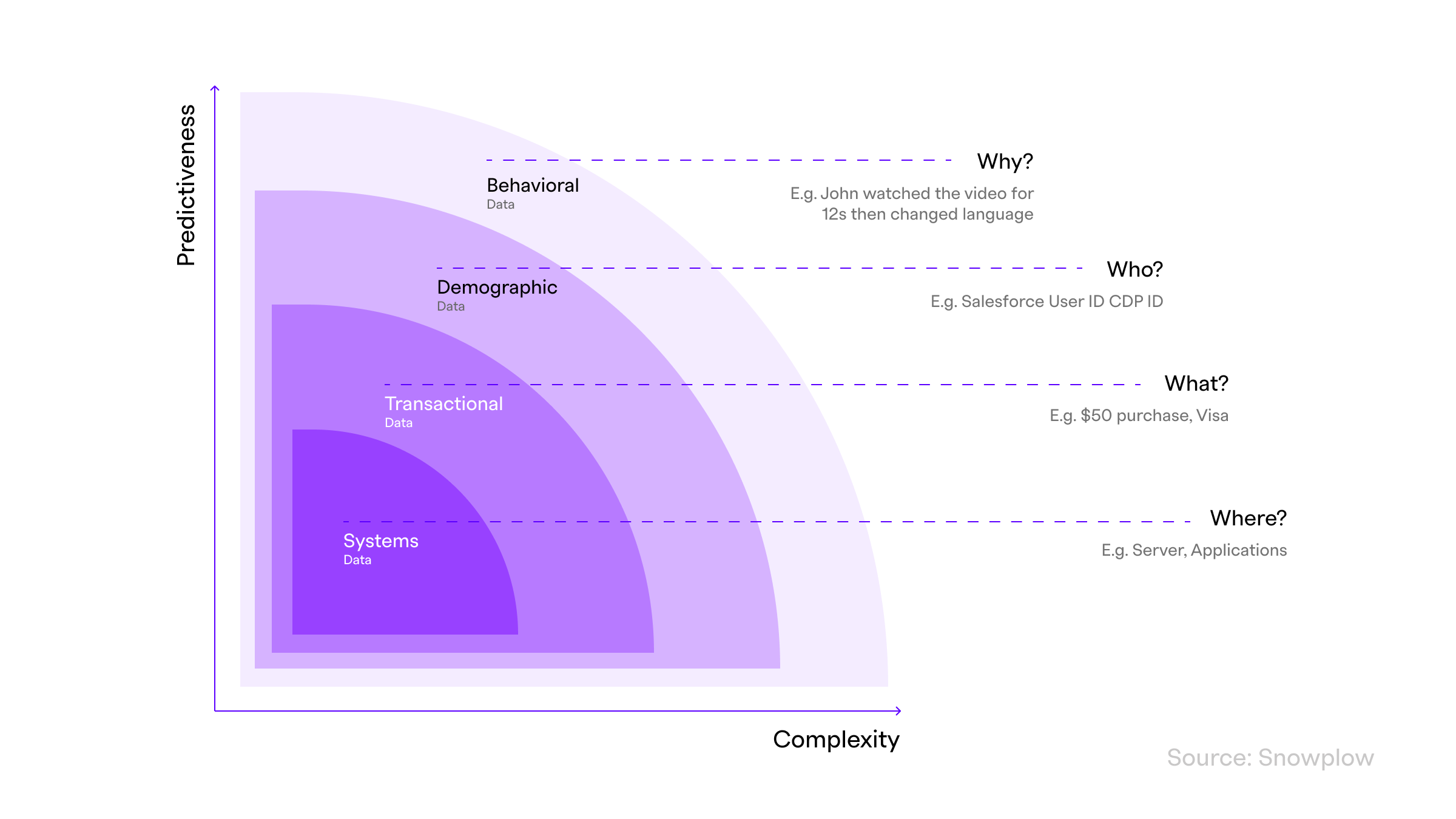
Predictiveness/complexity. Image Credits: Zitcha/Snowplow
Contextual targeting
The first level of true media targeting capability is delivering a message to a surface – a specific platform or device facing a target audience – based on its context. This is the most fundamental form of targeting and a crucial basis for all other targeting capabilities. The role of data at this stage is to forecast the inventory of placements available by placement type and location, which is key for retailers to manage their media network and optimize yield. Message relevance and brand safety are also dependent on this capability.
